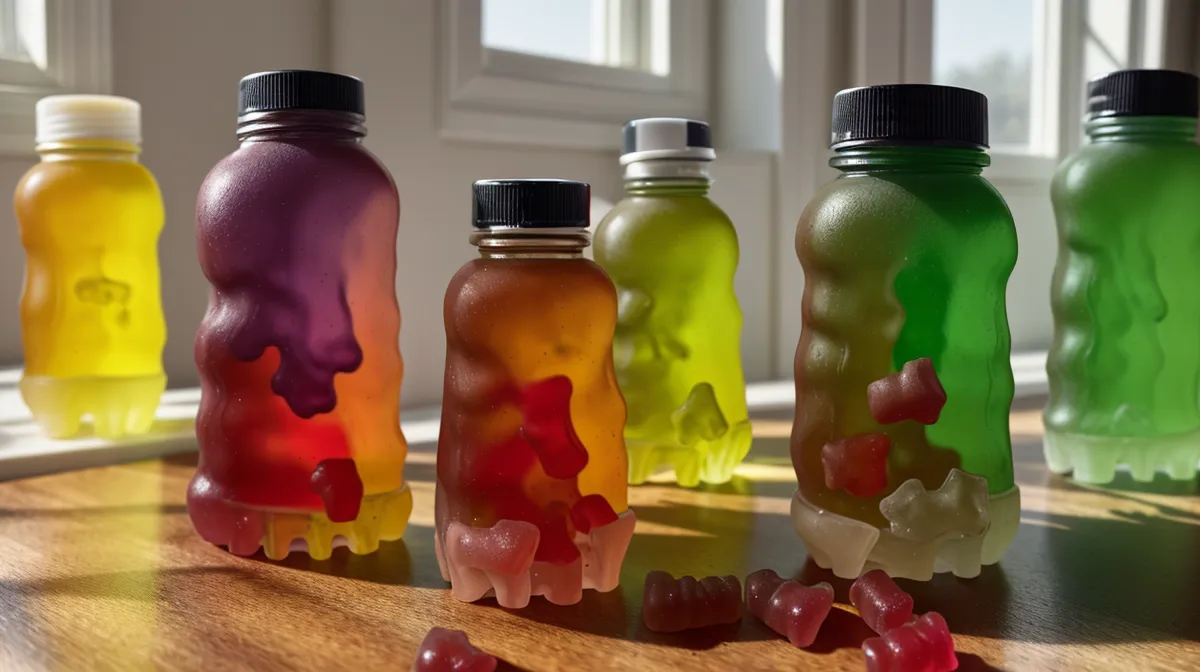
Six bottles were rotating through the caddy on my kitchen table last week, and only one of them was going to survive my grading period. Some were gummy probiotics, sold on being painless for a sensitive stomach like mine. Others were the capsule kind I've avoided since I was a kid. I wasn't comparing them for fun — a PTA parent from my school, Odessa Barnwell, had emailed asking whether she should finally push through the capsule aisle instead of sticking with gummies, and I realized I owed her a real answer instead of a guess.
Quick disclosure before we get into it: some of the links below are affiliate links, and I earn a small commission if you buy through them, at no extra cost to you. I'm not a doctor or a dietitian. I'm a fourth-grade teacher who reads supplement labels the way I read rough drafts, and everything here comes from what I've actually tried on my own kitchen table.
Reading Supplement Labels Like Report Cards: What Separates a Passing Gummy From a Failing One
As a teacher, I spend a lot of my working life looking for substance behind a flashy presentation. A glittery cover with no thesis statement still gets the red pen. Standing over that tray, it hit me that I'd been grading my gut health the same generous way I'd never grade an essay: I bought gummies because I liked how they tasted, not because I'd actually read the homework printed on the back of the bottle. Every bottle makes a soft rattle when I move it from the counter to the fridge at night, gummies resettling into whatever's left inside, and that small sound is usually my cue to check whether I'm nearly out.

Here is the thing about sugar: most drugstore gummy probiotics I checked landed around three grams of added sugar per serving. Stack three different supplements into one morning routine and you've eaten close to a fun-sized candy bar before breakfast. My inner teacher does not love that math, and I've done a full ingredient-name breakdown of where that sugar hides in another post, so I'll keep this version short. Proprietary blends are the other red flag on my rubric — when a label lists a group of ingredients without individual amounts, that's a company telling you it did the work but can't show the citations. There's an actual law behind how much a company can get away with here, the DSHEA 1994, though you don't need to memorize the statute to spot the pattern once you're looking for it. Whether a batch is third-party tested belongs on that same checklist, and it's involved enough that it deserves its own full writeup elsewhere — for now, just know it's a line I check every time.
Fiber tells a similar story. The standard daily recommendation for women sits around twenty-five grams, and most of the gummies on my tray offered maybe one or two. That's like showing up for the final after attending the first five minutes of the semester. You're not failing because you didn't try. You're failing because the format wasn't built to carry the weight.
The Capsule Unit I Failed on My Own
Long before gummies entered the picture, I tried capsules the way most adults are told to start. I could not do it. Every capsule probiotic I attempted sat on my tongue until I gagged, no matter how much water I chased it with, and after a few rough tries over the kitchen sink I gave up on that format entirely. That history is exactly why Odessa's email caught my attention. She told me she's been pill-phobic since childhood, and even a chewable aspirin gives her trouble. I recognized myself in that message immediately.
There's a longer, more technical piece on this site walking through capsule-versus-gummy delivery if the mechanics interest you. For me the decision was never technical, it was just whether I could get the thing down without a fight. Stress plays into that more than people expect. The gut-brain connection is real enough that one bad week of grading alone can set my stomach off, and I've written about that link in more depth in a gut-brain axis post elsewhere, so I won't repeat the whole argument here.
What changed for me wasn't a slow realization, it was ordinary lunches. I ate a full burrito at a taco place near school one afternoon, the kind of lunch that used to mean loosening my waistband for the drive home, and instead I got in the car and drove home with no pressure behind my ribs and no calculating where the nearest bathroom was. That's not a scientific measurement. It's just the difference between a stomach that ruins my afternoon and one that doesn't.
Does Gummy Format Survive a Hot Afternoon at Chatfield State Park?
Format matters more once you leave a climate-controlled kitchen. My family and I spent an afternoon at Chatfield State Park this summer, the kind of heat where anything left in the car turns into a small science experiment, and I'd tossed a half-empty bottle of gummies into my bag without thinking twice. By the time we packed up, they'd fused into something closer to a single sticky brick than individual servings. A capsule would have shrugged that off without a second thought.

That afternoon convinced me that "best supplement format" isn't a universal answer, no matter how many wellness accounts insist otherwise. Gummies work beautifully in a kitchen or a desk drawer at school. They do not hold up to a hot trunk, a cooler with no ice left, or hours away from a refrigerator. If you spend more time outdoors than at a kitchen table, capsules are probably doing you a favor you haven't noticed yet. And if you're wondering whether a gummy has quietly crossed the line from supplement into candy that happens to have probiotics in it, I already answered that directly in The Teacher's Gradebook: Are Gummy Probiotics Just Expensive Candy or Actual Gut Support?
PrimeBiome, GUT VITA, and SynoGut: Three Report Cards, Side by Side
Once I'd settled on gummies as my own format, I still needed to grade the actual contenders. PrimeBiome earned its spot on the tray first, mostly because the label didn't hide behind a proprietary curtain the way the drugstore brands did. Every strain and amount was printed plainly, which is the kind of transparency I reward in an actual essay too. The ninety-day refund window sealed it for me. In school terms that's close to a full semester, plenty of time to see whether a product does the work instead of just tasting good for two weeks.

I put PrimeBiome up against the Target brands I used to grab out of habit, and the ingredient list read like comparing a primary source to a secondhand summary of it — technically related, not the same depth of work. I laid out that full comparison, sugar counts included, in PrimeBiome vs Target Gummies: Best Probiotics for Sensitive Stomachs if you want the receipts.
The capsule side of my tray still gets a fair hearing, because plenty of readers aren't walking away from pills the way I did. SynoGut leans hard into fiber alongside its probiotic strains, which matters given how short most gummies fall on that twenty-five-gram target. GUT VITA is the budget pick of the group, with a short, easy-to-look-up ingredient list and a formula that most reviewers say caused no adjustment period at all — a reasonable place to start if cost is the deciding factor and swallowing a capsule has never been your problem.
Choose Gummy When, Choose Capsule When: The Final Grade
My actual grade, not a hedge, looks like this. Choose gummies when pills are the reason you quit supplements in the past, when you're mostly at a desk or in a kitchen where heat isn't a factor, and when you're willing to watch the sugar column instead of ignoring it. Choose capsules when you spend real time outdoors, when you want a higher fiber dose than a gummy can carry, or when added sugar of any amount is a dealbreaker for you. Neither format is morally superior. They're just built for different students.

For my own routine, gummies still get the passing grade, and PrimeBiome is the one currently sitting on my kitchen table, partly for the refund window that gives a fair trial instead of a rushed verdict, and partly because three years of doing this hasn't turned up a gummy that skipped the sugar tricks and still tasted decent. Odessa ended up trying the gummy route too, capsule-phobia and all, and it was the label transparency that sold her, not the flavor.
If you've been stuck choosing between the capsule aisle at Target and the endless scroll on Amazon without a real answer, the PrimeBiome routine here is where I'd point you first, with a caveat that applies to everything on this site: your gut, your call, and your own doctor's input matters more than mine. Class dismissed.