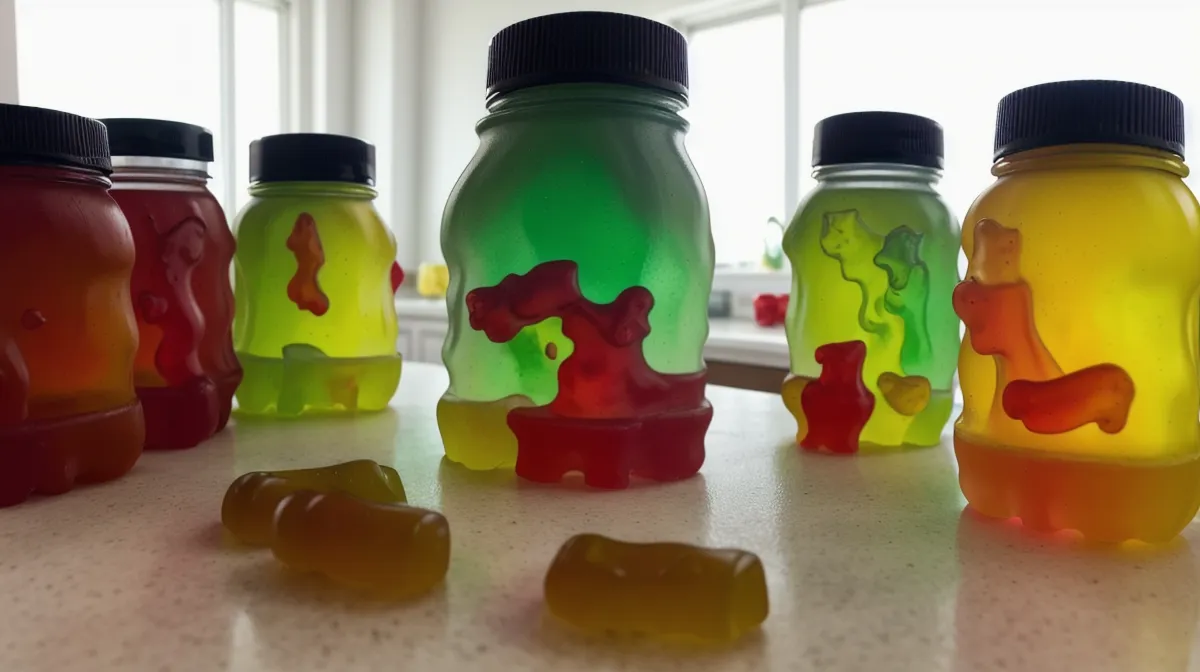
A bottle of "wellness" gummies can list corn syrup as its very first ingredient and still call itself gut health support in big friendly letters on the front. That contradiction is basically why I got into this whole habit of reading supplement labels the way I read a stack of student essays, looking for a real thesis instead of a nice cover page. Swallowing pills has never worked for me, which is how I ended up in the gummy vitamin aisle at Target at Highlands Ranch Town Center in the first place, and it's also how I burned through three straight months of a daily Greek yogurt habit that did absolutely nothing for my stomach before I gave gummy probiotics a serious look.
Grading is a habit that doesn't turn off just because I've left the classroom. Once I started treating supplement labels the same way I'd treat a rough draft, the pattern became obvious: most of what's marketed as gut-health support in gummy form is candy with a couple of active ingredients along for the ride. This is not a takedown of the entire gummy category. I still buy them, I still eat them. But it is a breakdown of the checklist I actually use before a bottle earns a spot on my kitchen counter.
Ingredient Transparency Starts With the List
Ingredient lists are ordered by weight, which means whatever comes first is doing the most work in that gummy, sugar included. If corn syrup, cane sugar, or glucose syrup shows up before anything resembling a vitamin or a probiotic strain, the marketing copy on the front of the bottle is not an accurate table of contents. Ingredient transparency starts right there, before you even flip the bottle over to the supplement label on the back — a front label that says "gut health" and a back label with sugar as ingredient number one are two different documents making two different promises.
This is also where the added-sugar shell game usually starts. A lot of labels lean on the total sugar number while burying the added sugar line in smaller type, and the gap between those two numbers is basically the tell — it's a concept worth a whole separate breakdown on its own, but the short version is that a label transparent about its added sugar is already ahead of most of the neon bottles on that same shelf.
What Does a Serving Actually Mean?
Most brands have settled on a typical gummy serving size of two gummies, and that number is exactly where the math gets slippery. Two gummies with five grams of sugar sounds modest until you remember that almost nobody stops at two — I certainly don't — and the real number you're eating is whatever multiple you actually reach for.
I don't lean much on the official cutoff for what a label is allowed to call "sugar-free" — that line exists for regulatory reasons that have very little to do with how a gummy actually sits in your stomach. What I use instead is my own rule of thumb: two grams of added sugar or less per serving I'd realistically eat. Past that number, I'm not looking at a supplement anymore. I'm looking at a piece of candy that happens to have a vitamin riding along.

The Sticky-Finger Test
Here's a quick physical check that has nothing to do with reading anything: rub a high-sugar gummy between two fingers for about thirty seconds before you eat it. You'll usually feel it — a faint tackiness that clings rather than wiping cleanly away, the same residue a piece of hard candy leaves behind. It's not scientific, but it's a fast gut check before the actual gut check.
Sugar Alcohols, Maltitol, and the Gelatin Question
Words ending in "-itol" are the next thing I scan for on a label, maltitol and sorbitol most of all. Manufacturers use them to keep that candy-like chew without adding to the technical sugar count, and for a lot of sensitive stomachs, that swap causes more trouble than the sugar it's replacing would have. If a gummy's texture feels suspiciously perfect and "sugar-free" is stamped across the front, checking for one of these on the ingredient list takes about five seconds and saves you the guessing game later.
Base matters too, and it usually shows up a few lines down the ingredient list: pectin, which comes from fruit, or gelatin, derived from animal collagen. For my stomach specifically, pectin-based gummies tend to sit easier, and I went deep on that particular comparison in a separate Pectin vs Gelatin Gummy Vitamins piece if you want the fuller side-by-side.
A Seal in the Corner Tells You More Than the Front Label
Color sourcing is a quick tell too. Labels that use black carrot extract, berry juice, or turmeric for their color are telling you something different than labels that lean on Red 40 or Yellow 5, even if both bottles taste identical. Natural colorants alone don't make a gummy healthy, but a manufacturer that bothered with them is usually a manufacturer that bothered with the rest of the formula too.
A "proprietary blend" line is my least favorite thing to find on a label, right up there with a five-paragraph essay that never actually states its thesis. It means the amounts of each ingredient are bundled together instead of broken out, so you have no way to grade whether there's a meaningful dose of anything in there or just a token sprinkle. A reader named Garvey Tsai, who has a habit of pointing me toward studies and label details I'd have otherwise missed, is the one who first got me checking for an independent testing seal instead of trusting front-label claims on faith — it's a small icon, easy to miss, and it tells you a lab outside the company actually verified what's in the bottle.
Heat-Stable Bacteria and the CFU Count
If the gummy in question is a probiotic, there's one more line to check: the CFU count, or Colony Forming Units. A label that actually states a number is already more transparent than one that just says "probiotic blend" and leaves it there. The strain matters too — heat-tolerant strains survive the manufacturing process better than fragile ones, though the full mechanics of that are their own topic. I've also kept a running list of best probiotic gummies without artificial sweeteners for anyone who wants a shortcut past this whole checklist.
Expiration dates are worth a glance for the same reason — potency on day one of a probiotic's life and potency near the end of its shelf life are not the same question, and it's one I'll leave for another day. Some labels also blur prebiotic and probiotic language together as if they're interchangeable. They are not, and that distinction alone deserves its own full breakdown rather than a rushed footnote here.

Building Your Own Rubric
None of this requires a lab, which is good, because mine is a kitchen table. A small rotating tray holds whatever bottles I'm currently testing, a strip of light tucked under the cabinet above lets me actually read the fine print without holding a bottle up to a window, and a running checklist stays taped to the fridge door so I'm not reinventing my own rubric every time something new shows up. There's a shelf above the sink with a couple of consumer health books and some printed label guides I reach for more often than I'd like to admit.
My friend Sondra, the school librarian I trust with pretty much everything, was the one who told me to actually organize this into something more useful than a running rant.
I noticed the actual payoff of all this grading on a random parent-teacher conference afternoon — the top button of my navy slacks still fastened at the end of it, no gut-swell pushing against the waistband the way it usually did by that hour. That's the whole point of the rubric. It's not about chasing a perfect bottle; it's about noticing when the small changes add up to something your own body tells you before any label does.
Let me be honest, no single bottle is going to check every box on this list, and that's fine — perfection was never the assignment. What I'm actually grading for is whether the "candy" part of a gummy vitamin is incidental to the formula or the entire point of it. I did wonder, after a particularly heavy lunch, whether Gut Vita might be the best supplement for bloating relief — I'm still testing that one, for what it's worth, and I'd rather tell you that honestly than pretend I've already graded it. Read the ingredient list before the front label, do the sticky-finger test, check for a real CFU count if it's a probiotic, and you'll catch most of what matters before the bottle ever makes it to your cart.