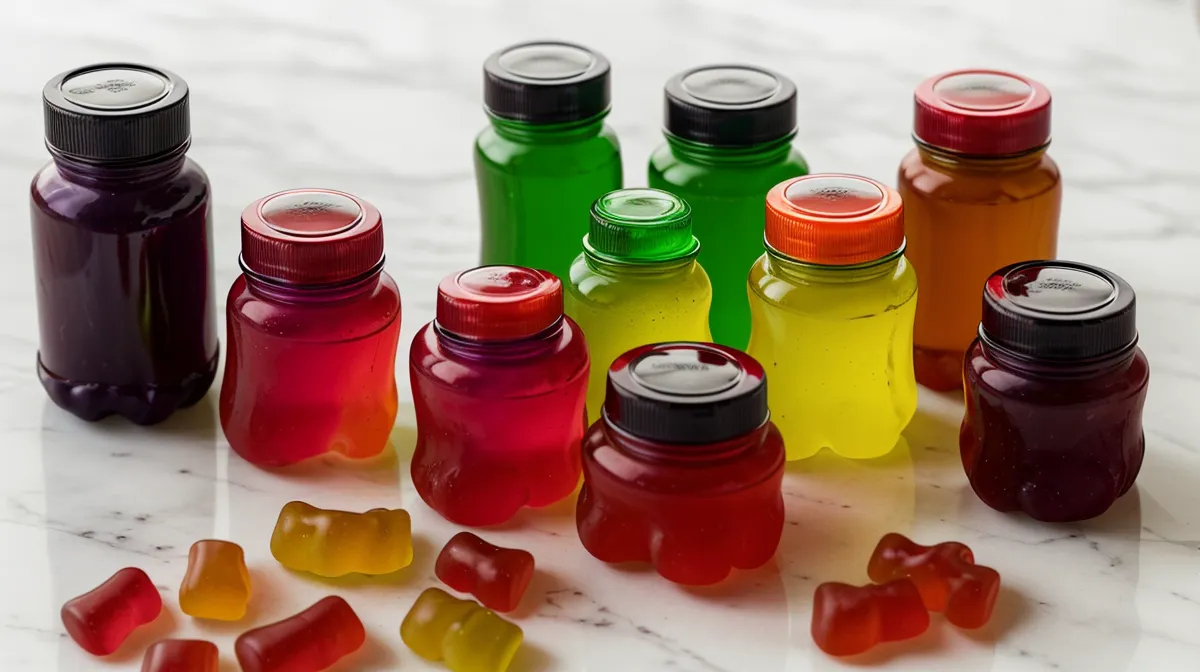
A grocery pickup order from the Trader Joe's on Leetsdale Drive last month didn't have a single bottle of Gas-X on it. Scrolling through the order history out of habit, ready to reorder the way I usually did, I realized it hadn't been on there in over a month. That blank space told me more about my gut health than any gummy vitamin label ever has, and it's the reason I finally sat down to sort out what actually separates a pectin gummy from a gelatin one when you've got a genuinely touchy stomach.
Pills have never been an option for me — the giant multivitamin horse pills at the pharmacy feel like a chore I quietly refuse to do, which is exactly why I fell down the adult gummy rabbit hole in the first place after spotting a whole shelf of them not that long ago. What I didn't expect was how quickly the format turned into its own research project. Most of what's on that shelf, once you read past the "natural berry flavor" claims, is candy with a marketing budget behind it, which offends the part of me that grades essays for a living.
Before I landed on comparing gelling agents specifically, my doctor suggested an elimination diet, the kind where you strip down to a handful of bland foods and reintroduce them one at a time. I made it eight days. By day eight I'd eaten something that wasn't on the approved list and decided a diet I couldn't sustain past a week wasn't going to tell me much about my actual gut. That's when I started paying closer attention to what was already in my supplement stash instead — specifically, what those gummies were even held together with.
The Rubbery Problem With Gelatin Gummies
Most gummy vitamins, whether they're marketed for gut health or just a basic multivitamin, use gelatin as the gelling agent, and it's usually one of the first ingredients listed on the bottle. Gelatin comes from animal collagen — connective tissue, mostly — which is part of why it has that stretchy, rubbery pull when you bite into it. I bought a gelatin-based multivitamin early on, one of those bottles promising "complete daily support," and it was, without exaggeration, the closest thing to chewing a rubber band that I've encountered in the supplement aisle.
That same gummy left a heavy, gluey feeling in the back of my throat for a good ten minutes afterward, and by the early afternoon my stomach felt swollen against my waistband. For someone whose stomach reacts to stress and spicy food alike, that kind of slow, sticky digestion is exactly the wrong direction. I didn't need a lab report to tell me gelatin and my gut weren't going to be friends — I needed about two days of testing to figure that out.
So What Actually Makes Pectin Different?
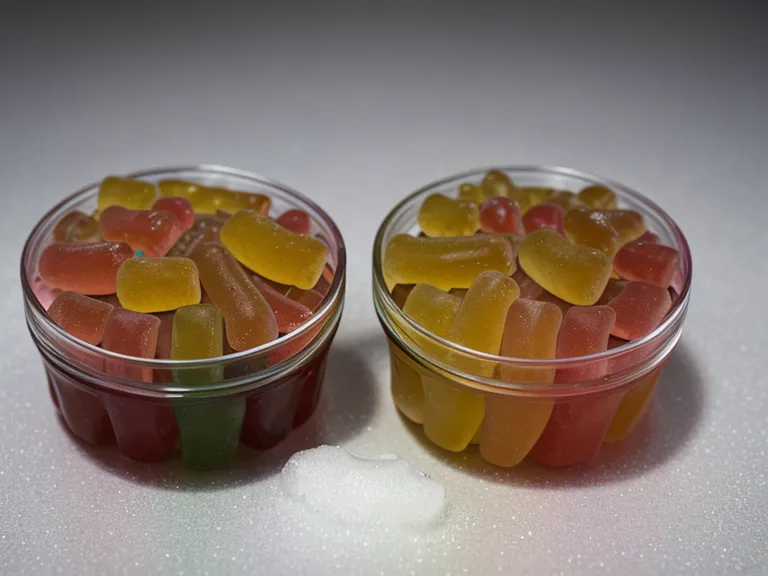
By the time I started reading labels the way I read a stack of essays, hunting for substance under the bright packaging, I noticed a pattern. Bottles marked "vegan" or "plant-based" had almost always swapped gelatin for pectin instead. Pectin comes from plant fiber, the kind found in apple peels and citrus pith, which is also why it's a common thickener in jam. It's technically a soluble fiber rather than a protein, since soluble fiber dissolves and ferments in the gut, where insoluble fiber mostly just passes through, and that distinction turns out to matter more than the label ever explains.
The texture gave it away before I even read the label. A pectin gummy pulls apart with a clean, quick snap instead of that rubbery stretch, and it feels closer to actual food than a chemistry project. Because that fiber also happens to feed the bacteria already living in your gut, it functions a bit like a prebiotic rather than a probiotic — food for the good bacteria instead of a dose of bacteria itself — which is a distinction worth knowing before you assume every gut-health gummy works the same way.
Pectin also holds up better in a warm kitchen. When I moved a half-empty bottle from the counter to the fridge one evening, the gummies inside gave a soft little rattle instead of the dull, stuck thud of a bottle that had started melting into itself, a small thing, but it told me the bottle hadn't been sitting somewhere too warm for too long. I've gone deeper into this kind of label comparison in my report card on popular gut health supplements, where the pattern of what my stomach tolerates versus what it fights became a lot clearer.
Pectin Isn't Automatically the Safer Choice
Here is the thing that surprised me: I assumed pectin was the automatic "A" choice for anyone with a sensitive stomach, the same way I assumed the kid who reads above grade level will ace every assignment. Neither assumption holds up. Pectin's high solubility — the exact quality that makes it easier on most systems — can be a problem if you deal with SIBO or certain kinds of IBS, because that same fiber can ferment quickly and feed bacteria that shouldn't be thriving where they are. Instead of easing digestion, it ends up producing more gas and more bloating.
Gelatin, in that specific case, might actually be the steadier option, since it's a protein rather than a fermentable fiber and doesn't feed anything on its way through. A neighbor of mine, who spends most of her free weekends elbow-deep in backyard vegetable gardening, was the one who put it simply when I explained all this over the fence: sometimes the "natural" plant option isn't automatically the gentler one, same as some backyard produce needs more care than the stuff that grows itself. If you're dealing with a diagnosed condition like SIBO, that's a conversation for your own doctor before you start any new gummy routine, not something to sort out from a bottle label.

Ten Weeks of Paying Attention
My particular flavor of sensitive stomach leans toward slow digestion and general heaviness rather than SIBO, so once I ruled that out, I switched my stash over to pectin-based gummies and started paying attention. By about the tenth week of sticking with pectin consistently, checking in on how my stomach felt after lunch had become such a non-event that I stopped writing it down in my notes. No gluey feeling in my throat, no sense of having swallowed a brick by the time the afternoon bell rang.
I noticed the change most clearly in that grocery order without Gas-X on it, more than in any label comparison. I'd stopped needing it without registering that I'd stopped needing it — a quiet kind of progress, nothing like the dramatic before-and-after language most supplement marketing reaches for. Progress that shows up as an item missing from a cart is easy to miss if you're not paying attention, and for weeks I wasn't.
Read the Label Like You're Grading It
If you're standing in a store aisle overwhelmed by gummy options, here's the actual homework I'd assign: check the gelling agent first, since gelatin gives you a non-fermentable protein base and pectin gives you a plant-based fiber one, and which of those suits you depends on your particular gut rather than which one sounds healthier. Pay attention to texture too — a gummy that fights back like a tire swing is almost always gelatin, while one that snaps apart cleanly is almost always pectin. And watch how you feel a few hours later, not just at the first bite, because a fermentation reaction to pectin can take time to show up as bloating.
While you're already reading that closely, glance at the sugar content too — plenty of gummy vitamins lean on added sugar to make the gelling agent palatable, and that's a separate homework assignment from the pectin-versus-gelatin question but worth doing at the same time. I've dug further into how these gelling agents interact with other ingredients, like ginger or fiber blends, in my piece on natural supplements for slow digestion. The lesson that's stuck with me longest isn't which gelling agent wins — it's that the format doesn't matter nearly as much as reading past the flavor claims to see what's actually holding the vitamin together, and applying that same scrutiny to every bottle before it goes in the cart.