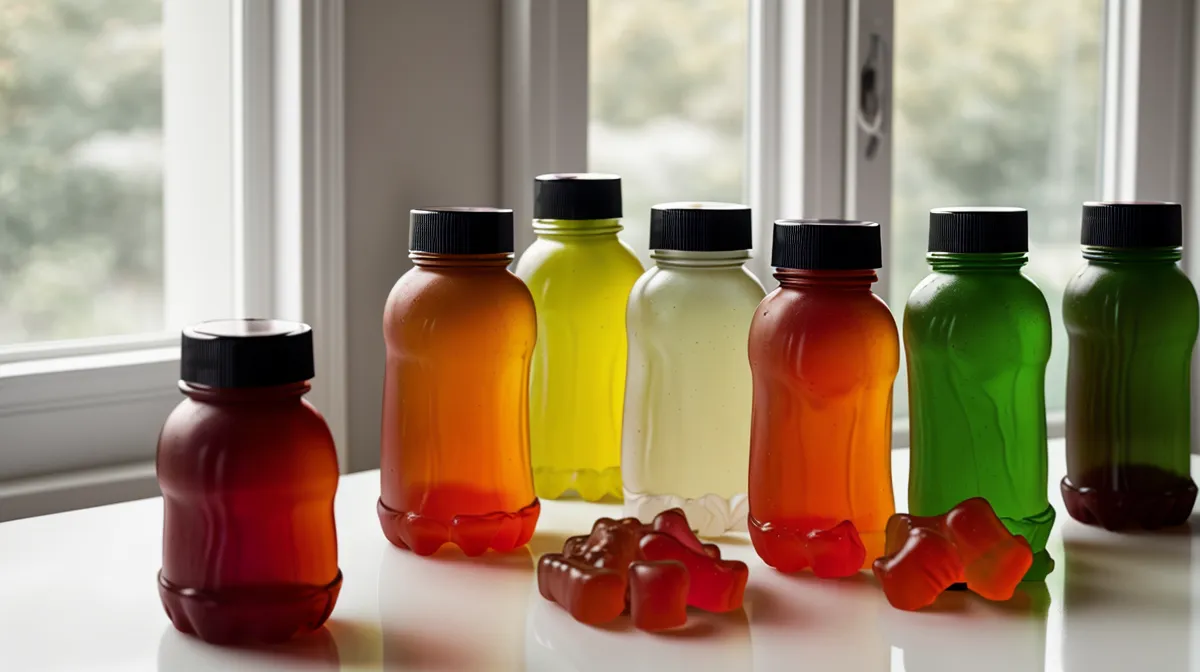
A gummy loaded with ten different bacterial strains and a gummy with just two can leave you exactly as gassy by the end of the school day. Proof that more probiotics is not automatically the fix most people assume when their gut health goes sideways after lunch. That's the myth worth correcting before we talk about any specific product: the assumption that gas relief is always a bacteria problem, and that the answer is always a bigger, fancier bottle of probiotic gummies. After plenty of trial and error working through supplement after supplement as a teacher with a stomach that holds a grudge, I've learned the label everyone reaches for first is rarely the one that actually matters.
Before you read another word, here's my disclosure: this post contains affiliate links, and I earn a commission if you buy through them, at no extra cost to you. I've tried a range of these gut supplements myself, but I need to say clearly that I'm not a doctor, a dietitian, or a scientist — just someone who grades ingredient lists the way I grade spelling tests, out of habit as much as curiosity.
Is Afternoon Gas Really a Probiotic Problem?
Here's the thing about gas after lunch: it doesn't always come from the same place, and lumping it all under "gut health" is where a lot of gummy marketing gets lazy. Sometimes bloating really is about bacterial balance, which is what probiotics are built to help with. Other times it's about how well your body broke down what you just ate in the first place — a digestive enzyme issue, not a bacteria one — and no number of extra probiotic strains fixes a plate of food your gut couldn't process to begin with. Piling on more bacteria when the real issue is enzymes can make the afternoon worse instead of better, since now there's more fermentation happening around food that was already sitting there undigested.
Odessa Barnwell, a PTA parent from our school who emails me every few weeks with a supplement question, asked me almost exactly this not long ago. She wanted to know if switching to a stronger probiotic gummy would finally stop her afternoon bloating, and my honest answer was that it might not, because from how she described it, the pattern sounded a lot more like the enzyme kind of gas than the bacteria kind. That's not a diagnosis. It's just a pattern I've noticed after reading enough of these emails to see it repeat.
More Strains on the Label Doesn't Mean More Relief
When I started reading probiotic gummy labels specifically with gas relief in mind, the CFU count — the number of live organisms packed into each gummy — is what most shoppers stare at longest, and I get why. Bigger feels like better. But I won't turn this into a math lesson on colony-forming units, because the count alone doesn't tell you whether those strains survive your stomach acid, or whether they're even suited to gas and bloating specifically. Lactobacillus and Bifidobacterium strains show up again and again in discussions of abdominal gas, and that matters more to me than a gummy bragging about a strain count three times as long.

The Ingredient List Homework Most Shoppers Skip
Prebiotics and probiotics get used almost interchangeably in gummy marketing, and they are not the same thing — a mix-up worth knowing exists, even if unpacking the full difference is a lesson for another post. Added sugar is the other line I check first, since a probiotic gummy is still a gummy, and some of the ones marketed hardest for gut health carry more sugar than you'd expect from something sold next to the vitamins. And if you've ever heard someone mention "leaky gut" as the reason behind their bloating, that's a real term with a real conversation behind it, just not one I'm going to unpack here — a different homework assignment entirely.
Kefir was my first attempt at fixing this the "natural" way, and it lasted about as long as you'd expect from something that smells the way kefir smells. I never made it through a single carton before giving up and going looking for something in gummy form instead. Frieda Castellanos, who teaches the grade next door and shares a wall with my classroom, is the first person I text whenever a gummy tastes genuinely awful, and there have been a few texts. One bargain bottle from a Target end-cap tasted like a chalky orange candle, and Frieda still brings it up when she wants to make me laugh at lunch.
There's a burrito stand at Stanley Marketplace in Aurora that used to be a gamble for me — a full lunch there, then a drive home with my waistband cutting in like it had shrunk two sizes. The day that stopped happening is the day I started paying attention to which supplement was actually doing something besides tasting good. A pectin-based gummy with the right strains got me through that same burrito without the drive-home discomfort, and that's a bigger data point to me than any ingredient list ever was.
Pick the Format You'll Actually Use Every Day
None of this matters if you won't take the supplement consistently, which is the whole reason gummies exist as a category. At one point I went as far as creating a spreadsheet to track my own routine, color-coding it like a seating chart, and the biggest lesson it taught me wasn't about ingredients at all — it was that GUT VITA looked great on paper and then sat untouched in my cabinet because I couldn't make myself swallow a capsule every morning.
SynoGut had the same problem for me, even though the fiber-forward formula is a genuinely solid approach if regularity is your main complaint rather than gas specifically. It leans on fiber more than probiotics, and while I won't get into the difference between soluble and insoluble fiber types here, that distinction is worth knowing if fiber is more your issue than bacteria. Both of these are capsules, and both are well-regarded, but a capsule you skip twice a week does less for you than a gummy you actually finish.

PrimeBiome is the one that stuck for me, mostly because it's pectin-based rather than gelatin-based, which meant it broke down faster and didn't turn into a chewy afterthought at the bottom of my bag by the time lunch rolled around. Each gummy carries about 2 grams of sugar, light enough that it doesn't read as dessert, and the 90-day refund window gave me enough room to know whether it was actually working before committing to it long-term. It's not the cheapest bottle in this comparison, and I won't pretend otherwise, but it's the one I've actually finished a full bottle of without missing days.
How the Three Compare, Report-Card Style
Here's how the three stack up side by side, grades and all:
| Product | Format | Key Benefit | The Grade |
|---|---|---|---|
| PrimeBiome | Gummy (Pectin) | Gas Relief & Skin Clarity | A+ (Compliance King) |
| GUT VITA | Capsule | Budget-Friendly Digestion | B (Great Value, Hard to Swallow) |
| SynoGut | Capsule | Fiber & Regularity | B+ (Solid for Regularity) |
Match the Supplement to the Actual Problem
The takeaway isn't that probiotics are useless for gas — they're genuinely useful for a specific kind of gas, the bacterial-imbalance kind. Before buying anything, it's worth asking whether the bloating shows up after specific meals (more likely enzymes), after antibiotics or a rough stretch of sleep (more likely bacteria), or basically all the time no matter what you eat, which is worth a conversation with an actual doctor rather than another bottle. That's the filter I use before recommending anything to a reader, a PTA parent, or the teacher three doors down.
Grading the format honestly matters as much as grading the ingredients, and my comparison of gummies and capsules goes deeper into that specific question if you want the fuller breakdown before deciding. But the short version: the best supplement is the one you actually take, not the one with the most impressive label.
Consider this the corrected homework, the version with the red pen already applied. If gas relief specifically is your problem and you've ruled out the obvious culprits, PrimeBiome is where I'd start, simply because it's built around that exact use case and it's a format I could actually stick with every single day. Read the label anyway, grade it the way I taught you to, and pick the one you'll actually keep taking instead of leaving in a drawer.