I'm holding a bottle of gummy probiotics up to the light, red pen uncapped, and the fourth ingredient down stops me mid-squint: more sugar. Grading labels has turned into my strange after-school hobby since I started chasing real gut health instead of a berry-flavored sugar rush, and this particular bottle is already failing before I even reach the actual probiotic strain. Label-reading, it turns out, is a lot like grading essays — a confident cover page never guarantees a strong thesis underneath.
Target is where most of this research happens, specifically the vitamin aisle near Park Meadows Mall in Lone Tree, which has quietly become my unofficial second classroom. I've bought enough of these bottles at this point that the cashiers could probably identify me by my cart alone: gummies, more gummies, and the occasional bag of pretzels for emotional support. What follows isn't a scientific study. It's a teacher's grading rubric applied to something I actually need to work, because my stomach has never once given me the benefit of the doubt.
Why Does Ingredient Order on the Label Actually Matter?
Here's the thing: there's an actual FDA ingredient order rule that keeps this honest — ingredients get listed from most to least by weight, so whatever sits first on that list is what you're mostly eating. In my favorite berry gummy, the first three slots belonged to sugar, glucose syrup, and water, while the actual probiotic culture showed up near the bottom like a footnote nobody reads.
Once I started checking, the pattern held across nearly every brand I picked up at Target. Most lean hard into the candy side of 'gummy vitamin' to make the chewy texture work, which is exactly why identifying healthy gummy vitamins that are not just candy turned into its own kind of homework. The short version: read past the marketing to the fine print, every single time.
The Sugar Math That Made Me Put the Bottle Back
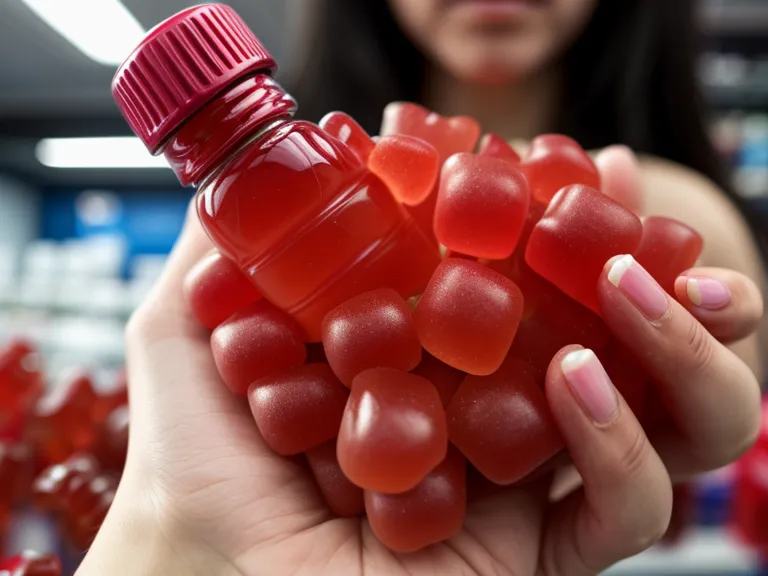
Most of these gummies carry around four grams of sugar per serving, and by the standard teaspoon conversion, that's roughly one full teaspoon. Stack a probiotic, a fiber gummy, and a multivitamin together and you've eaten three teaspoons of sugar before breakfast even starts, which for a stomach that already struggles is less like a gentle nudge and more like holding a match near a grease fire.
The smell got to me too — crack open a new bottle and a sugary, almost candy-shop berry scent puffs out before you've even tipped one into your hand. It's a smell that says dessert aisle, not wellness aisle. My dentist eventually connected the other dot: sticky gummies wedge into back teeth and sit there, feeding bacteria in exactly the wrong spot. That one stung, mostly because I'd been so proud of myself for "taking my vitamins."
What I Actually Tried That Didn't Work
Readers ask me this constantly, so let me be honest about the one that flopped hardest: a run of probiotic liquid shots from Whole Foods, the little vinegary bottles by the register. I wanted to believe in them, and I gave up within a week. The taste alone made it feel like a punishment rather than a habit, and no amount of "it's good for you" pep talk from myself made that easier to swallow, pun fully intended. These days I follow a one-bottle rule before committing to anything bigger: try the small size first, no matter how convincing the marketing sounds, because a flashy label has never once predicted how something actually sits in my stomach.
Can Gummy Probiotics Make Bloating Worse Instead of Better?
Short answer: sometimes, yes, and it surprised me the first time I heard it. For some people, adding a daily probiotic can actually increase bloating rather than fix it, and that's a conversation worth having with an actual doctor rather than guessing your way through it on a forum at midnight. I'm not qualified to diagnose anyone's gut, myself included, but I am qualified to say that if a "gut health" routine makes things louder and more uncomfortable instead of calmer, that's data, not a personality flaw.

Checking CFU Counts, Expiration Dates, and Testing Seals
Three more things earned a spot on my rubric once I started looking closely. I check whether a CFU count is listed at all, and whether that number is promised at the end of shelf life rather than just on the day it left the factory, since potency fades over time and a label that only brags about day-one numbers is dodging the harder question. I also look for some kind of third-party testing seal on the bottle, which is the closest thing a gummy has to a second grader double-checking the first grader's work.
Sugar-free versions brought their own asterisk: a lot of them lean on sugar alcohols that some stomachs simply don't tolerate well, which is its own rabbit hole I won't fully open here. More than once I've picked up a bottle expecting a probiotic and found a prebiotic fiber blend instead, two different jobs wearing the same gummy costume. Even "added sugar" hides under enough aliases on an ingredient list that I started keeping a running note on my phone just to hold the brands accountable.
Pectin, Gelatin, and the Gluten Question
Base matters more than people think. Some gummies use pectin instead of gelatin, which matters if you're vegan or if you've ever left a bottle in a hot car and come back to something closer to jam, though the full pectin-versus-gelatin breakdown is really its own homework assignment for another day.
Ines Calleja, a teacher from another school in our district, asked me a version of this from the opposite direction: never mind vegan or not, does the gummy itself contain gluten? The honest answer is that it depends entirely on the brand, so the only real move is scanning the ingredient list for wheat-derived starches or fillers yourself, the same way you'd scan a recipe card before serving it to a kid with an allergy.
What Finally Passed My Rubric
A few strains earned a permanent spot on my counter, Bacillus coagulans among them, mostly because it tends to survive manufacturing better than more delicate strains. I won't pretend to know the full microbiology — only that it shows up again and again on the labels of bottles that actually worked for me. Comparing notes properly is how I ended up grading my gut health gummies like student essays and eventually testing a few prebiotic fiber gummies for teachers on the side, since fiber and probiotics turned out to be two different subjects entirely.
My neighbor Rebekah Tanaka, who's usually mid-training for some half-marathon and fixated on recovery nutrition, asked once whether any of this actually does anything or if I'm just paying for flavored patience. Fair question. The clearest proof I have isn't dramatic: not long ago I went to reorder my usual grocery list online and realized Gas-X had quietly disappeared from the cart entirely, which is the kind of boring, unglamorous win that actually means something changed.
That's really the whole rubric: check the order, do the sugar math, ask about the base, and don't trust a bottle that won't show its CFU homework. My Target cart still holds more gummies than any reasonable adult's probably should, and I've made peace with that part. The part I did have to unlearn was assuming a cute bottle and a fun flavor meant the thing inside deserved a passing grade. That still has to be earned, same as anything else worth grading.